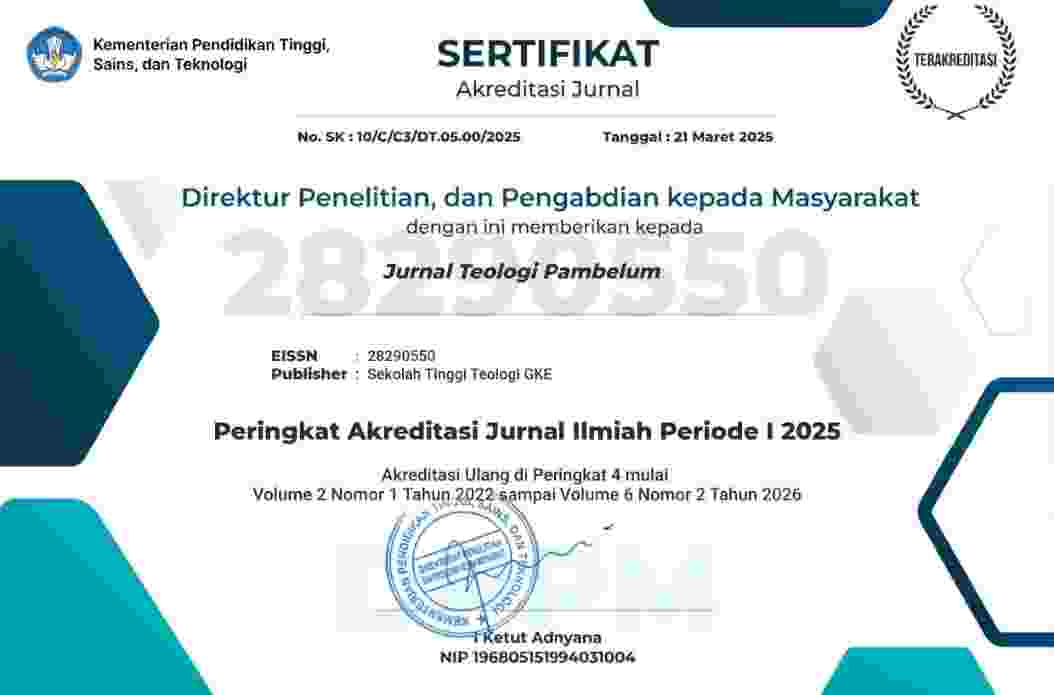
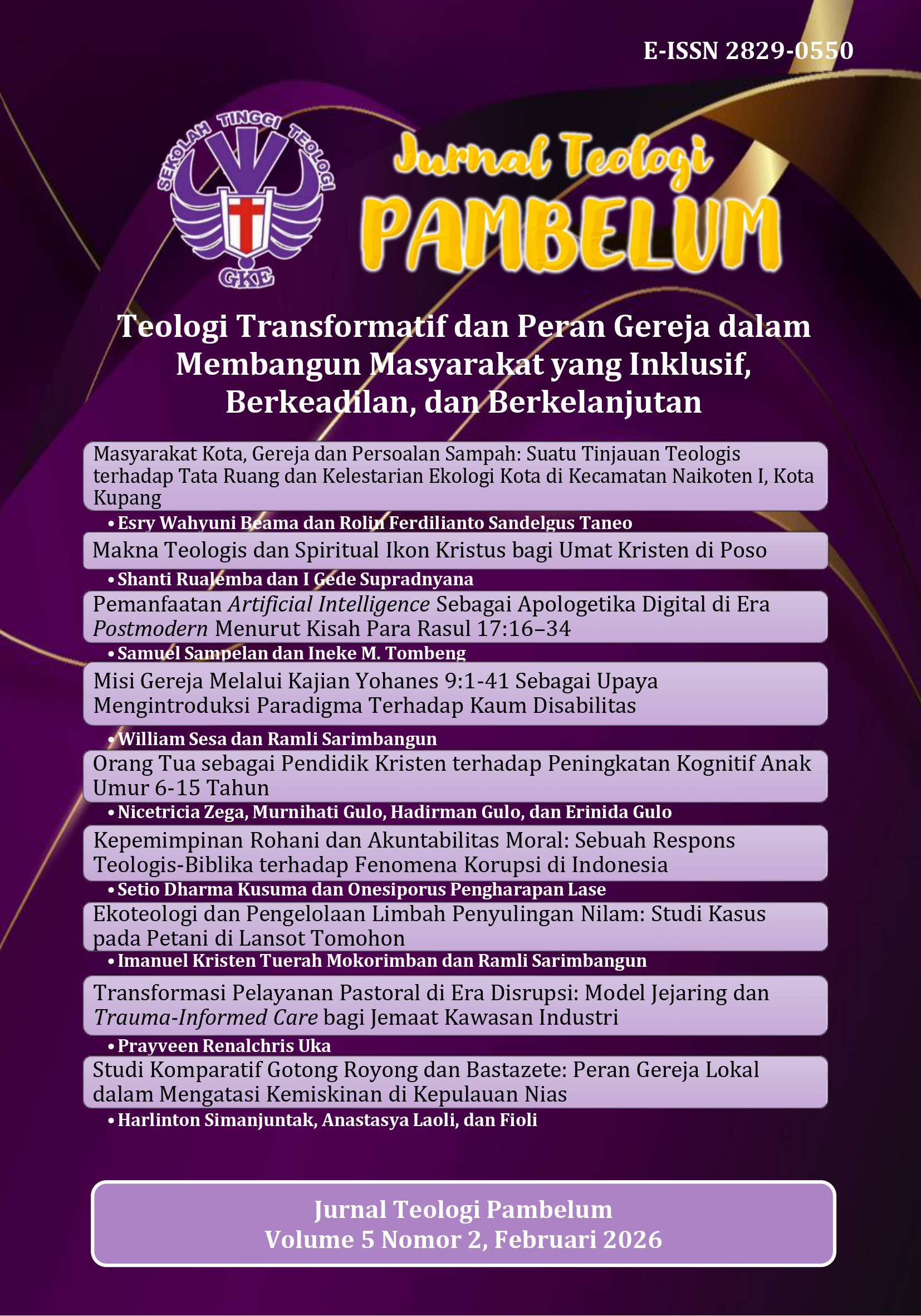
Ecotheology and the Management of Patchouli Distillation Waste: A Case Study of Farmers in Lansot Tomohon
DOI:
https://doi.org/10.59002/jtp.v5i2.188Keywords:
ecotheology, patchouli, Ecological Awareness, wasteAbstract
Patchouli oil distillation activities in Lansot Village, Tomohon City, have generated serious ecological problems, including water pollution caused by the disposal of distillation waste near residential wells, air pollution from fuel combustion, and machine noise that disturbs public health and comfort. These conditions reflect low ecological awareness and the absence of adequate waste-management regulations and technology. This study aims to develop an ecotheological perspective for patchouli farmers in sustainable waste management based on the concepts of relational ontology and theocentric stewardship by Jorgenson and Padgett. Using a qualitative case-study approach, data were collected through field observation and in-depth interviews with farmers, affected residents, and local government. The findings show that waste problems are not merely technical but rooted in limited ecological education and social tensions reinforced by close kinship ties, which discourage public protest. The study concludes that integrating Christian faith values through ecological discipleship and collaboration between church, government, and farming communities can enable just, participatory, and sustainable waste management.
References
Bauckham, R. (2015). Living with Other Creatures: Green Exegesis and Theology. Baylor University Press.
Conradie, E. M. (2016). Christianity and Ecological Theology: Resources for Further Research. Wipf and Stock.
Creswell, J. W. (2013). Qualitative Inquiry and Research Design: Choosing Among Five Approaches. Sage.
Denzin, N. K. (2017). The Research Act. McGraw-Hill.
Edwards, D. (2006). Ecology at the Heart of Faith. Orbis Books.
Farida Aryani, Sari, N. M., Syauqi, A., Paurru, P., & Zamroni, A. (2022). Penapisan Fitokimia Limbah Padat Penyulingan Minyak Nilam (Pogestemon heyneatus). Buletin Loupe, 18(02), 60–65. https://doi.org/10.51967/buletinloupe.v18i02.1889
Francis, P. (2015). Laudato Si’: On Care for Our Common Home. Libreria Editrice Vaticana.
Horrell, D. G. (2018). The Bible and the Environment: Towards a Critical Ecological Biblical Theology. Routledge.
Johnson, E. A. (2014). Ask the Beasts: Darwin and the God of Love. Bloomsbury.
Jorgensen, D. S., & Padgett, A. G. (2020). Ecotheology: A Christian Conversation. Baker Academic.
McFague, S. (2008). A New Climate for Theology: God, the World, and Global Warming. Fortress Press.
Rasmussen, L. L. (2013). Earth-Honoring Faith: Religious Ethics in a New Key. Oxford University Press.
Santmire, P. H. (2019). Eco Activist Testament: Faith Explorers for Fellow Travelers. Fortress Press.
Siwy, H. X., & Hutagalung, S. (2024). Memelihara Surga Bumi: Analisis Persepsi Gereja terhadap Ekoteologi melalui Sudut Pandang Kejadian 2:15. Veritas Lux Mea (Jurnal Teologi dan Pendidikan Kristen), 6(1), 148–163. https://doi.org/10.59177/veritas.v6i1.271
Sumule, L. (2024). Melampaui Antropocentrism: Ekoteologi dan Etika Lingkungan dalam Dialog, Sebuah Pendekatan Interdisipliner Untuk Keberlanjutan dan Keadilan Ekologis. Jurnal Abdiel: Khazanah Pemikiran Teologi, Pendidikan Agama Kristen dan Musik Gereja, 8(2), 166–178. https://doi.org/10.37368/ja.v8i2.625
Wirzba, N. (2015). From Nature to Creation: A Christian Vision for Understanding and Loving Our World. Baker Academic.
Downloads
Published
How to Cite
Issue
Section
License
Copyright (c) 2026 Imanuel Kristen Tuerah Mokorimban, Ramli Sarimbangun

This work is licensed under a Creative Commons Attribution 4.0 International License.